Tech & Tools
SEC EDGAR in 2026: Source Control Before Stock Research
A practical 2026 workflow for locking the issuer, filing type, period, exhibit, and exact evidence table before turning AI-assisted stock research into publishable analysis.
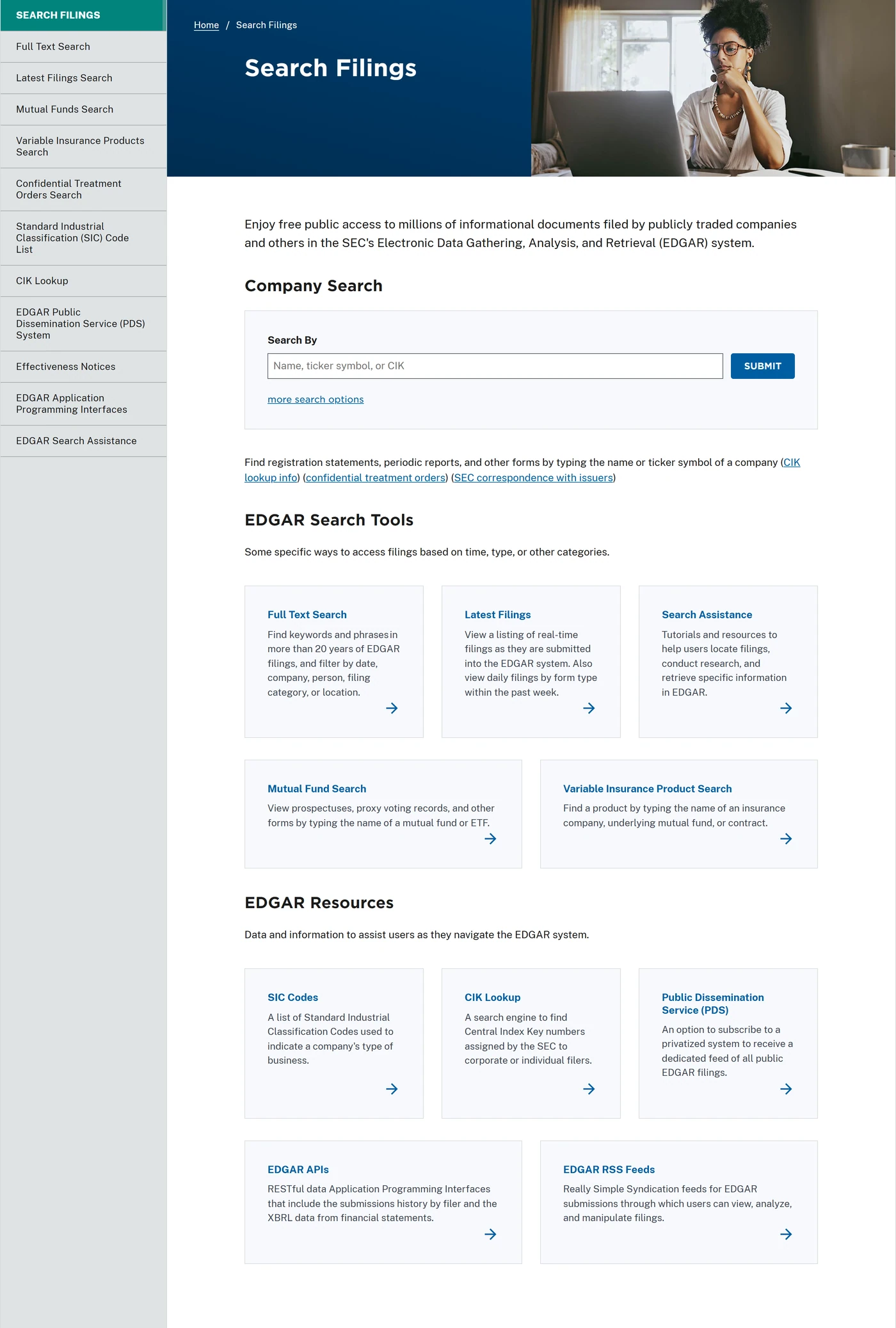
Thesis
(Source: SEC EDGAR Search and Access)
AI tools can summarize a company quickly, but the first question in stock research is not whether the summary sounds plausible. The first question is whether the underlying filing exists, whether the period is correct, and whether the number came from the company document rather than a secondary retelling.
Related reading: ChatGPT, Gemini, and Claude in 2026: Evidence Discipline Before Stock Claims | Fed Rate Outlook in 2026: Data Triggers Before Cuts | U.S. Stock Investing in 2026: Broker Checks Before Stock Selection
That is why SEC EDGAR belongs at the front of a publish-safe workflow. For U.S.-listed companies, EDGAR is the public record layer: annual reports, quarterly reports, current reports, registration statements, proxy materials, and exhibits all sit behind the narrative that investors eventually read.
The practical rule is simple: freeze the filing evidence before drafting the story. A model can help organize the evidence after that point, but it should not decide which filing is authoritative.
Source Evidence Snapshot
The SEC search page cited above anchors the issuer and filing lookup. The API capture below anchors the structured-data layer, which is a different evidence role from the search interface.
 Source capture: SEC EDGAR Application Programming Interfaces, captured 2026-05-21. Notice the split between submission-history data and XBRL company-facts data, which is the structured layer behind many filing-based screens.
These two official pages define the workflow boundary. The search page is for finding the right issuer and filing. The API page is for understanding which structured data can be pulled from EDGAR without turning a model summary into the primary source.
For stock research, EDGAR should be treated as source control, not as an afterthought. The workflow is wrong if a draft is written first and the filing is searched only afterward to justify the draft.
The claim flips only when the subject company is outside the SEC filing universe or when the relevant fact is not a company disclosure. For a foreign issuer, private company, commodity fund, macro release, or regulator dataset, the primary source may be an exchange, central bank, government agency, or official issuer page instead. The principle stays the same: source first, narrative second.
The Four-Step EDGAR Workflow
1. Lock the Issuer
Start with the company name, ticker, or CIK in SEC Search Filings. Ticker symbols can change, companies can spin off, and similar names can point to different registrants. The CIK is the stable identifier that keeps the evidence tied to the correct legal entity.
The first check is therefore not "what did the stock do?" It is "which registrant filed this document?" That matters for holding-company structures, ADRs, recent IPOs, and companies that have renamed or separated business units.
2. Lock the Filing Type
The filing type changes the weight of the evidence. A 10-K gives the annual audited frame. A 10-Q updates the quarter. An 8-K can contain an earnings release, acquisition agreement, management change, debt filing, or other event-specific exhibit. A proxy statement can explain compensation, governance, share authorization, and voting items.
The safest workflow records the form type and filing date in the note. A sentence such as "per the company's latest 10-Q" is weaker than "per the company's Form 10-Q filed on May 2, 2026." The second sentence is easier to verify and harder to misuse.
3. Lock the Period
Most stock-research errors are period errors. Revenue can be quarterly, trailing twelve months, fiscal year, calendar year, or segment-level. Cash flow can move differently from earnings. Share count can be basic, diluted, weighted-average, or end-of-period.
Before using a number, the note should answer three questions:
- What period does the number cover?
- Is it company-wide or segment-specific?
- Is it GAAP, non-GAAP, operating, adjusted, or management-defined?
If the answer is unclear, the number should not become the anchor of a thesis.
4. Lock the Exact Exhibit or Table
The filing landing page is not enough. The useful source is usually a table, footnote, risk factor, MD&A paragraph, or exhibit. A publish-ready evidence note should name the exact area of the filing that carries the claim.
For example, an earnings 8-K may include a press-release exhibit, and that exhibit may include both GAAP and non-GAAP tables. The workflow should say which table is being used. Without that discipline, a model can blend adjusted EBITDA, operating income, and net income into one false story.
Where the EDGAR APIs Fit
SEC's API documentation matters because it shows that EDGAR is not only a manual search portal. The submissions endpoint can expose filing history by CIK. The XBRL company-facts endpoints can expose structured disclosure items across filings. That is useful for building repeatable checks, especially when comparing filings across periods.
The API layer does not remove the need to read the filing. It reduces transcription risk. If a number is pulled from structured company-facts data, the analyst still needs to confirm the taxonomy label, unit, fiscal period, and whether the concept represents the actual metric being discussed.
The highest-value use is not automated stock picking. It is auditability: rerun the same query, point back to the SEC data surface, and keep the narrative tied to a stable source.
Common Pitfalls
The first pitfall is ticker shortcutting. A ticker is convenient, but it is not the legal entity. The CIK check prevents accidental cross-company sourcing.
The second pitfall is exhibit drift. A press release, investor deck, and 10-Q may describe the same quarter with different emphasis. The evidence note should identify which one is being cited.
The third pitfall is non-GAAP language. Management-defined metrics can be useful, but they need reconciliation context. If a thesis depends on "adjusted" profitability, the source note should say so clearly.
The fourth pitfall is asking an AI model to "find the latest numbers" without requiring citations. The model may return a useful outline, but the workflow still needs a filing URL, filing date, table, and period before publication.
How to Apply This Before Publishing
A publish-safe EDGAR note can be short. It needs only five fields:
| Field | Minimum standard |
|---|---|
| Issuer | Company name plus CIK or exact SEC company page |
| Filing | Form type and filing date |
| Evidence area | Exhibit, table, footnote, risk factor, or MD&A paragraph |
| Period | Quarter, fiscal year, or date range |
| Claim | One sentence that uses only what the source supports |
Once those five fields exist, an AI model can help turn them into a readable explanation. Without those fields, the model is being asked to perform trust rather than analysis.
Bottom Line
EDGAR is not just a database for lawyers. It is the operating checkpoint that keeps stock research from becoming source-shaped storytelling.
For evidence-first publishing, the correct order is filing, evidence note, thesis, risk check, then draft. A chatbot can help with the last three steps, but it should not replace the first two. The filing is where the research earns the right to become a narrative.